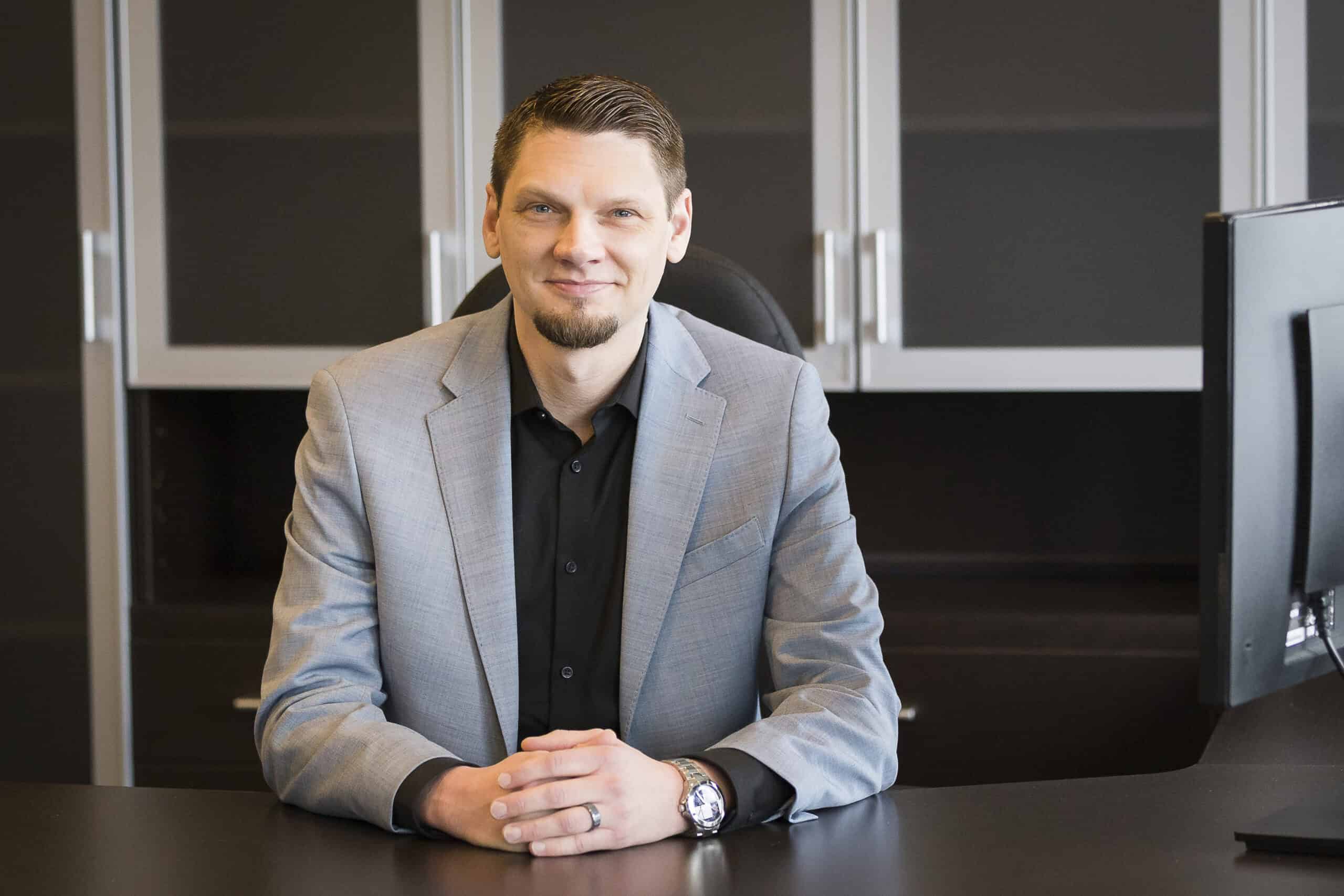
Ben Campbell has been CEO of Northern Development since January 1, 2025.
1. What has surprised you most during your first six months as CEO?
Even after years as CFO, stepping into the CEO role has given me a broader view of how deeply our work impacts people’s lives. I am pleasantly surprised by the opportunity that is available to our organization to continue innovating and supporting rural northern B.C. Through the nature of our work, we are able to catalyze economic development in the north and support resident attraction and retention. There are a lot of other people and organizations that have a vested interest in this, and I’m surprised by how many I’ve had the opportunity to meet with already.
2. What are the biggest challenges you’ve faced so far in your new role?
The scale of rural economic disparities is always top of mind, but balancing limited resources across such diverse communities is one of the most complex challenges. Each community—from Valemount to Nisga’a, Lillooet to Fort Nelson – has different priorities, needs, timelines, and opportunities. Another challenge was internal: adjusting staffing capacity as I assumed the responsibilities of CEO. This specific challenge was a joy to address, and I internally promoted two strong team members, Felicia Magee and Kurtis Caston, to Senior Director, Economic Development and Programming and Director of Finance, respectively. Both of these individuals are very experienced with the workings of the Trust and the people in our service region, and I’m grateful to have them bolstering my leadership team.
3. Beyond the strategic plan, what are you working on?
I’m investing in impact measurement—ensuring our programs clearly demonstrate outcomes and the money we invest in our communities and non-profits in our service region. I would also like to strengthen our relationship with the small and medium sized businesses in northern BC. I believe that investments in these organizations will spur long-term resilient economies in the north. Additionally, I see an opportunity for us to use our leadership, strong local knowledge and streamlined process to expand our role as the efficient administrator for external funding opportunities in our region, ensuring that the North’s perspective is taken into account when dollars invested into our region.
4. How has your background as CFO shaped your approach to being CEO?
Being CFO gave me a deep understanding of our financial structure and sustainability. That lens helps me make grounded, long-term decisions as CEO. It also trained me to ask hard questions—about risk, efficiency, and return on investment—which I now apply more holistically across programs and partnerships. I’ve transitioned from stewarding the books to stewarding our broader mission.
5. What is your vision for innovation in rural economic development?
Innovation doesn’t always mean high tech—it means a new approach.
In a more traditional sense we are also supporting finding new, efficient ways to use our natural resources, proven ways of increasing productivity in manufacturing and sharing statistics and finding from our research projects with in the region including those performed on camp work and its effect on families, in northern British Columbia, and connectivity across our service region. My vision is to blend traditional knowledge with creative solutions to make rural economies more diverse, resilient, inclusive and forward looking.
6. On a personal note, how have you managed the transition from CFO to CEO?
It’s been humbling and energizing. I’ve had to shift from a more analytical, behind-the-scenes role to a visible leadership presence. That means more stakeholder engagement and more space for big-picture thinking. Maintaining a healthy balance between work and family, continuing to support my son at the soccer field and my daughter at the gymnastics club, has help me stay grounded reminds me of the strong quality of life that we get to enjoy here.